Military Jeep Tires - Rod grip tires, or NDT (non-directional tire) in US military parlance, are an early tire tread pattern developed for off-road use.
The handlebar grips are characterized by a solid rubber circumferential center strip with alternating large, strong lugs on either side. They extend over the entire width of the tread. This pattern is characterized by the fact that they do not have a tread pattern or sipes cut into the rubber to clean the water.
Military Jeep Tires

Loader grip tires were developed in the 1930s and were the standard military model during World War II on vehicles ranging from jeeps to heavy trucks and armored cars.
The Original Jeep Was Patented 75 Years Ago Today
They fell out of favor in the 1970s and largely disappeared in the 1990s after being replaced by newer patterns with better overall performance.
In the early 1920s, instead of simply focusing on a rubber surface that would not deteriorate quickly, the design of molded tire treads began to be purposeful. However, until the mid-1920s, there was little theoretical background. The tread patterns reported by The Autocar were introduced at the 1922 London Motor Show.
Some of these by Miller and the French company Bergougnan[fr] show what is now recognized as the classic grip pattern of sharp-edged crossbars with a wide center band. However, they were supplied for narrow high-pressure tires, for highway use and at relatively high speeds. Their design was based on simple concepts of cross bars providing longitudinal traction, without any theory of tread design or experimental measurement of their performance. In practice, such angular tread blocks wore poorly and unevenly,
Originally flat blocks that wear away with a sloping surface. This wear pattern was one reason for rotating the tires between the wheels so that they wear in equal time in each direction.
Coker Vintage Truck And Military Tires 71014 Reviews
Later and better patterns were the 1922 Dunlop "Traction" tread pattern and the 1927 "Triple Stud" pattern. They followed the same principle of a solid center rib with rectangular blocks, but were designed to improve tread wear. The middle rib became a thin and almost stunted rib between the square blocks. The side blocks were now separated in the middle, though joined by another narrow rib, and their leading and trailing edges formed a trapezoid rather than a square.
This triangular eyelet pattern was a successful pattern for narrow tires, including motorcycles, and remained popular with many manufacturers until the 1950s.
The first studded tires purposely used as off-road tires were developed in the pre-war period as truck tires specifically for military use. They used transverse profile rods for grip. arranged in a spiral.

A helical pattern was used to avoid uneven rolling radius and vibration of the profile with simple cross beams and large gaps between them. This spiral pattern also caused lateral force, especially on asphalt. Since all tires had the same "arm", this force was amplified on the two sides of the vehicle. A central stop rib has been added to counteract this force.
Jeep Wrangler Willys Xtreme Recon Is A Mean Military Inspired Machine
However, the stop rib was only partially successful; Snow conditions prompted Swiss Post to use left and right tires to balance power in the vehicle. Later developments would use a balanced arrangement of ribs in a tail or herringbone pattern.
A common solution for later low-speed military traction was to use straight bars, but rely on a center rib to avoid their vibration problems on tarmac.
All grips are cross ply, which was developed when this was the only way to make tires. The simple pattern of the rod grips also made them easy to manufacture and durable even when made from inferior or replacement rubber and padded with extreme amounts of non-rubber fillers.
While the bar handle works well as a heavy mud pattern and is acceptable for most off-road surfaces, the lack of a small tread pattern makes it poor at clearing water. Therefore, they are very prone to hydroplaning on wet asphalt or slippery surfaces. They work well on snow and carry chains well, but their large slippery, unbroken rubber surface makes them poor on ice.
A Custom V8 Kaiser Jeep M715 Pickup Truck On 42\
The small footprint of the rod handle profile causes them to perform poorly on clay. Even in the 1930s, balloon tires with wider treads, smaller tread patterns and lower pressures were available for desert use.
The grips' poor permeability can limit their performance in very wet mud. On later models like the NATO, water can be squeezed out between the blocks, making the mud drier and denser. Because the handlebar grip doesn't allow it to escape yet, a layer of water-soaked mud can settle like quicksand, which remains extremely slippery.
Although they stayed on heavy trucks. This was probably due to the higher speeds of light vehicles and the poor grip of the bar on the asphalt. The development of tires, especially the development of radial tires, also made possible a multi-purpose tire that performs well both on the road and off-road.
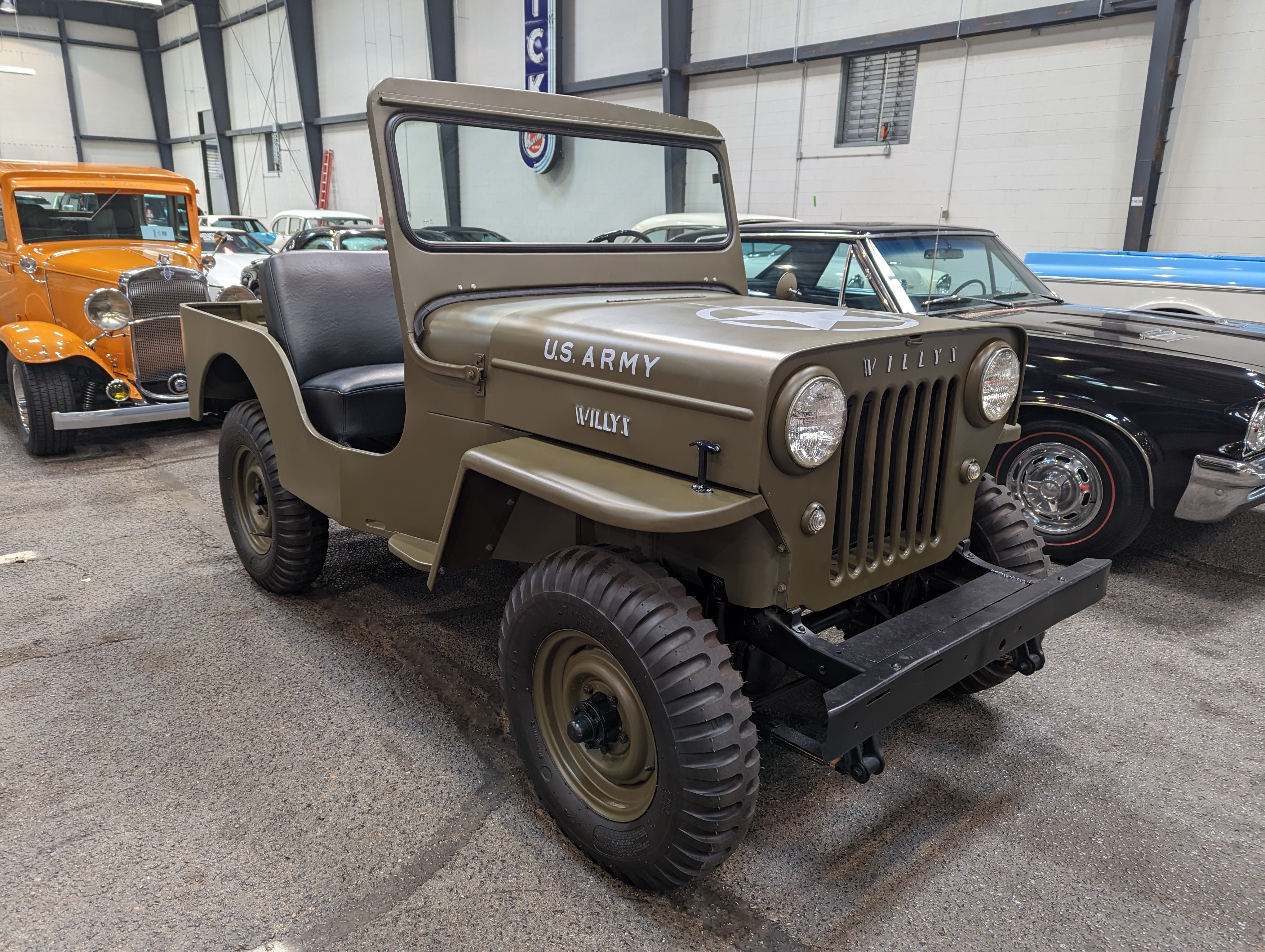
Today's standard military replacement for the bar grip tire is now a pattern such as the Michelin XZL or "NATO pattern". It consists of large blocks of solid rubber similar in size to rod handles. These blocks are arranged in three-block crossbeams so that there is now good water clearance between the blocks, both radially and axially. However, because the blocks are still large and ungrooved, water drainage from the block surface is still poor and the tires still have the potential to aquaslide on wet asphalt compared to a normal road tire. This pattern is also directional and therefore the wheels should be installed on either the left or right side. One of the biggest finishing touches to restoring most WWII Jeeps is installing battle rims. While the first 20,000 Jeeps rolled on solid rims, all subsequent Jeeps had "combat rims." The Kelsey Hayes Wheel Company made these wheels throughout the war.
Michelin Military Tires?
Developed in 1941, the idea behind the combat rim was that any GI could quickly remove a tire from a rim in a combat situation by simply deflating the tire and unscrewing eight bolts. A metal band called "Beadlock" was also added. This acted as a sort of "run-through", allowing the Jeep to travel more than 40 miles on a flat tire.
It is difficult to find original fighting rims in good condition that are safe enough to use. The prices of good, used and restorable combat rims have skyrocketed in recent years. This, along with the questionable safety of rims over 75 years old, has led many restorers to turn to modern reproductions.
Many of the vendors advertised in this magazine sell replica battle rims that are almost indistinguishable from the originals.
This article uses modern combat rims to demonstrate how to install tires safely. However, if you are lucky enough to find rebuildable original battle rims that are safe to use, the same steps apply.
Military Tires & Rims Bigiron Auctions
One part of the battle rim that has not carried over into modern times is the beadlocks. These metal strips protect the inner tube from being crushed between the two sides of the rim and, as mentioned, secure the tire's wrists. Therefore, when a tire goes flat, the tire itself does not slide off the combat rim, allowing riders to continue riding.
But since we don't have tanks anymore, pearl locks are no longer needed. Therefore, no one reproduced them.
The originals are often rusted and in poor condition, so restorers cut them down. However, it's still vitally important that the tube doesn't get stuck on the edge, so today we use a "flap" - essentially a rubber version of a bead lock.

Now that we've covered combat rims, let's say you have a brand new set of rims fitted with new 6.00 x 16 tires, tubes and valves. How to bring them all together?
My 2021 Willys Came With Bfg Km2s And Not Firestone Destinations. Does Any One Know Why? All The Marketing, Press And Even The Jeep Website Say The Willy's Comes With Firestone Destinations?
Installing tires on combat rims may seem like a daunting task, but it's quite simple. But if you follow these illustrated steps, you'll have five (don't forget the spare!) battle rims ready to install on your Jeep!
Before you get started, you'll need: a bicycle tire pump, a 3/4-inch socket torque wrench (the deep version helps), a blanket or flat box, baby powder, dish soap, and Permatex Anti-Seize (optional). .) Don't forget the combat rims (with nuts and bolts), 6.00 x 16 tires, tire walls, TR-15 tubes, valve stem guards and valve caps.
Assuming you have modern rubber sidewalls with an offset hole (standard for 6.00 x 16 military tires), you may need to make some modifications. They are often a little too thick around the valve hole. For me, simply increasing the size of the hole worked. I used a Dremel tool to shave some of the rubber from the concave around the hole to about three inches in circumference.
Push the tube flap through the valve as far as it will go. Then put your valve stem guard on. If done correctly, there should be a small gap between them
Role Call: In Normandy, D Day Jeeps Left For Dead Brought France Back To Life
9.00 x16 military tires, 9.00 20 military tires, tires military discount, good year military tires, 15 inch military jeep tires, military 16.5 tires, coker military tires, military off road tires, military tires for sale, military surplus tires 16.5, used military jeep tires, military truck tires


0 Comments